
Cambrionix Connect: Software for Managing USB Hubs, Data Sync & Firmware Updates
-

RECORDING
How to build a real-device testing lab that pays for itself
A discussion on AI-accelerated release cycles, in-house vs. outsourced device testing, and the infrastructure decisions that define QA labs' output, with examples from Snap


Snap's QA team use case

ThunderSync5-C16 demo

50 minutes including Q&A
What the webinar is about
The most expensive setup is the one you don't control
From an outsourced lab with a monthly cost of approximately $1M and limited control over turnaround to an in-house lab, supporting 12,000+ physical devices, 700,000 daily test executions, and delivering over $2M in annual cost savings.
During the webinar, Farid Shayegh, who led that transition at Snap, walked through the full story: the pressure points that made outsourcing unsustainable, the decisions and trade-offs behind building in-house, and what the outcome actually looked like in practice.
Speakers: Hosted by Nicholas Metcalfe, Cambrionix, with Farid Shayegh, former Engineering TPM at Snap.

Key topics the webinar covered
Speakers

Head of Technical Sales Engineering | Cambrionix
Nicholas Metcalfe
Nick works closely with some of the world's largest SQA teams, helping them integrate Cambrionix solutions into testing workflows at every stage of deployment. Nick specializes in product demonstrations, translating complex technical concepts into practical solutions, and providing hands-on guidance to help teams scale device testing efficiently and reliably.

Ex-Engineering Technical Program Manager | Snap Inc.
Farid Shayegh
Farid is a Technical Program Manager and consultant specializing in AI, infrastructure, and large-scale distributed testing systems. He founded and scaled Snap's Devicelab platform, supporting 12,000+ mobile devices and over 700,000 daily test executions at 99.3%+ CI reliability. Farid has deployed AI-driven automation to eliminate manual test triage and has led infrastructure programs that delivered over $2M in annual cost savings.


High-density USB hub solutions
for real-device SQA
For over 15 years, Cambrionix has built USB infrastructure for the world's most demanding software quality assurance teams.
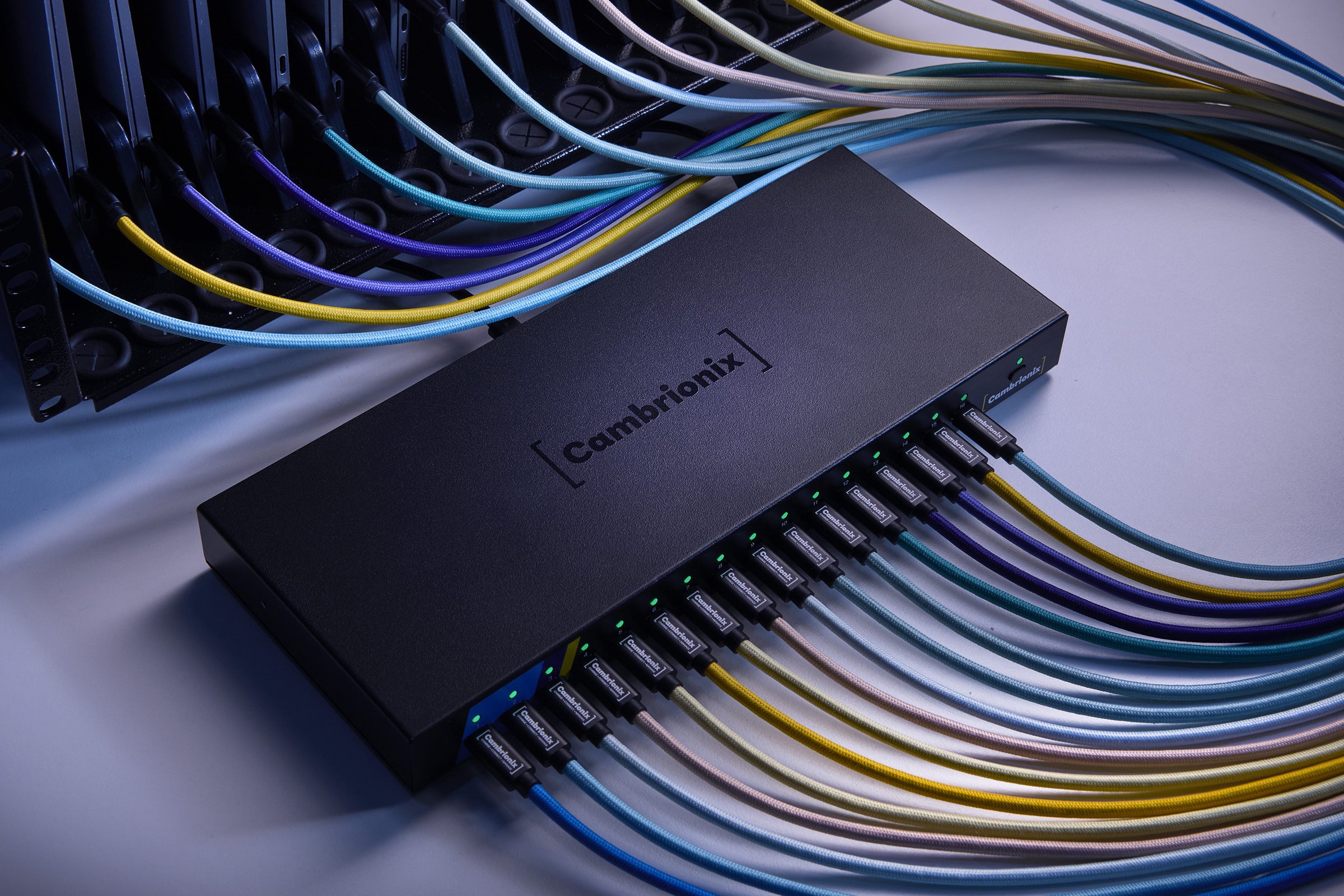
Our ThunderSync solutions enable labs to run more tests in parallel, restore device fleets up to 7× faster, and maintain stable connectivity under heavy workloads.
“Cambrionix’s high-speed USB hubs seamlessly integrate with back-end systems and enable broader and deeper test coverage within a single test fixture, helping teams address more edge and corner cases effectively – accelerating development that delivers improved product reliability to end users.”
Google Lab
FAQ
-
Who is this webinar for?
This webinar is designed for QA engineers, device lab managers, release engineering teams, and infrastructure engineers supporting real-device testing environments.
-
Why is real-device testing important?
Simulators and emulators are valuable for early-stage testing at scale, but they cannot replicate the full range of real-world conditions. Hardware-specific behaviours, OEM differences, biometric flows, battery performance under load, and network variability can only be reliably validated on physical devices.
Skipping real-device testing means edge cases that only surface on real hardware reach production, where they become user-visible bugs, negative reviews, and failed updates. The largest SQA labs in the world continue to run tests across thousands of physical devices for exactly this reason.
-
Is this webinar relevant if we already use a mix of real devices and simulators?
Yes. The session will cover where simulators and emulators add value, where they fall short, and what the hybrid model looks like in practice at leading SQA labs. The webinar will be relevant whether you're evaluating your current setup or planning a change.